YORKSHIRE RELOCATION · PERSONAL SUPPORT
A thoughtful school choice in Yorkshire.
School-search support for international families moving to York and Yorkshire: explore state, grammar and independent options that fit your child and your new daily routine.
Free 15–30-minute phone or video call. We’ll respond within one working day to confirm.
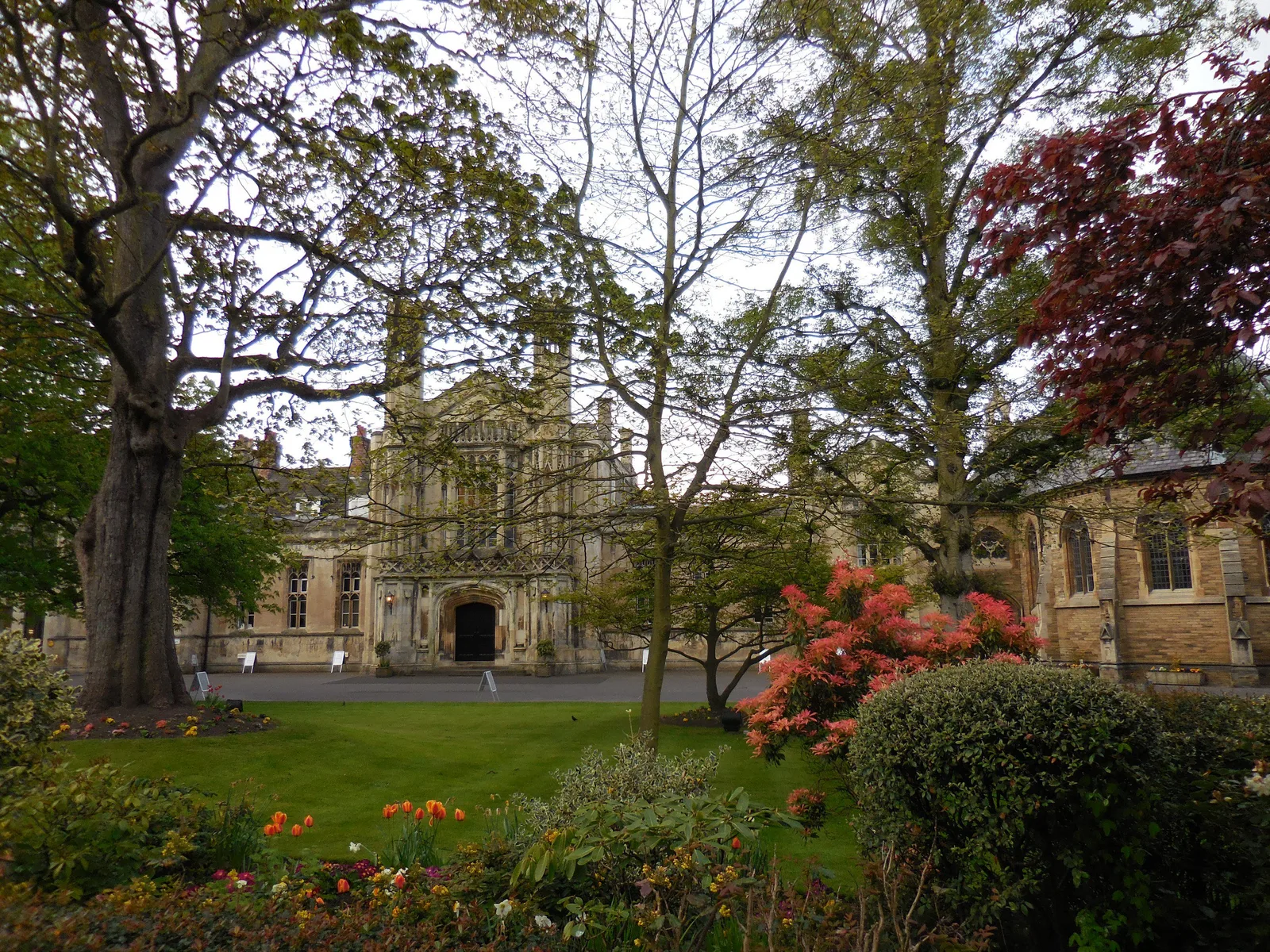
St Peter’s School, York. Photo: Uhooep / Wikimedia Commons, CC BY-SA 4.0. Original photograph unchanged; responsive display crop. No school endorsement or partnership is implied.
School search for a family relocating to the UK.
A school search begins with your child’s age, previous curriculum, interests, language confidence and support needs. We help families explore primary, secondary and sixth-form options alongside their home search, so the educational decision and everyday journey make sense together.
Irina and her family have been rooted in Yorkshire for more than ten years. Our service is centred on York and covers Leeds, Harrogate, Hull, Scarborough, Whitby, Ripon and surrounding towns. We research options, arrange and accompany visits, and assist with completing and submitting applications. Services are available in English, German and Russian. School places are decided by the responsible authority or school and cannot be guaranteed.
Understand the three school routes.
State-funded schools.
State schools receive government funding; academies are part of this route, not fee-paying independent schools. Your child’s year group, address evidence, the published admission priorities and available places matter. The government’s school-types guide explains the distinctions.
Selective state grammar schools.
Grammar schools are a subset of state schools that use academic selection. Registration for an entrance test and an application for a school place are separate steps. Meeting a test standard does not guarantee an offer. North Yorkshire’s selective-school guidance identifies Ripon Grammar, Ermysted’s Grammar and Skipton Girls’ High School; this is a North Yorkshire list, not a list of every grammar school across Yorkshire.
Independent, fee-paying schools.
Independent schools manage applications directly and charge fees. Ask about assessment, entry points, day or boarding arrangements and the full costs. In England, “public school” can refer to a traditional independent school, which can be confusing if that phrase means state-funded education where you live. We use “independent (fee-paying)” to make the distinction clear.
Yorkshire schools worth exploring.
These researched examples show the variety available, rather than a ranking or a promise of a place. The right choice depends on your child, availability, budget and travel. Cheers does not claim an endorsement or partnership with these schools. Sources checked on 11 October 2026; recheck the current year’s policies before applying.
Fulford School, York — state-funded, ages 11–18.
Fulford is a mixed secondary academy with sixth-form provision. Its October 2023 Ofsted inspection judged the school Outstanding, including sixth form, education and personal development. That dated evidence makes it a strong option to investigate, rather than a reason to overlook your own child’s needs. Ask about subjects, pastoral support and the practical school journey from a proposed home.
Availability is a crucial part of this search: Fulford’s admissions guidance reports that some in-year applicants, including families within catchment, have been refused because of capacity. Keep credible alternatives. Secondary applications are processed through York’s admissions team; sixth-form enquiries go directly to the school.
Archbishop Holgate’s School, York — state-funded, ages 11–18.
This mixed Church of England academy offers secondary education and sixth form. Its 13 January 2026 Ofsted report records Strong standard in six areas, including achievement, inclusion and post-16 provision, and Expected standard for attendance and behaviour; safeguarding standards were met. The report describes carefully tailored post-16 study and academic and vocational choices. These are useful points to explore when comparing a child’s needs and ambitions.
Discuss pastoral provision, subjects and the school’s Christian character alongside the published admissions information. Faith character alone does not establish an individual applicant’s priority. The new report should be read on its own terms rather than repeating an older overall Outstanding label.
St Peter’s School, York — independent, ages 2–18.
St Peter’s provides an age-spanning route from early years to sixth form, with day and boarding options. Its official school information describes academic, co-curricular and pastoral provision across the school family. This can be worth exploring for siblings at different stages, while checking the daily timetable, interests and support appropriate to each child.
The application guidance sets out entry points, including Reception, Years 7, 9 and 12, and encourages advance planning; occasional other spaces require a direct enquiry. Compare the age-specific assessment route and live fee schedule, including what is covered, boarding and additional expenses, rather than assuming one price applies throughout.
Queen Ethelburga’s — independent, primary years to sixth form.
Queen Ethelburga’s is a coeducational day and boarding school in North Yorkshire. Its current age-group information distinguishes Chapter House (Reception to Year 5), King’s Magna (Years 6–9), and the College (Years 10–13), with nursery information separately. Published provision includes English-language programmes, academic and vocational choices, sport and enrichment. Ask which pathway and level of language support suit your child, rather than treating the whole school as one course.
The international application route and UK route should be checked against your circumstances. For a day pupil, the campus outside central York makes the real school run especially relevant; investigate the school’s transport information, journey times and costs. For boarding, discuss age-specific routines, pastoral support and family travel.
Bootham School, York — independent, nursery to sixth form.
Bootham’s Quaker ethos gives it a distinctive emphasis on personal development and community, alongside academic study. Its junior route covers nursery through Year 6, with senior Years 7–11 and College sixth form. Families can explore what that ethos means in daily school life, how their child’s interests are supported and whether day or boarding arrangements fit the move. See the school’s own introduction.
The junior admissions process uses visits, school reports and taster experiences; the senior process explains entrance assessments and sixth-form requirements. Ask about the correct entry year, language or learning support, fees and the campus location that applies to your child. A familiar school name is less useful than a clear picture of their day.
Ripon Grammar School — selective state, secondary and sixth form.
Ripon Grammar is a coeducational state day and boarding school, serving secondary and sixth-form pupils. Its admissions guidance identifies Years 7, 9 and 12 as main entry points. Years 7–11 admissions are managed by North Yorkshire; sixth-form admission is managed directly by the school. In-year testing may be possible, but admission depends on selection and vacancies.
Its academic selection and boarding option make it different from an ordinary non-selective local secondary school. Check test registration, the place application, boarding eligibility and costs separately. A family living around York should assess the actual journey to Ripon, not assume a workable daily commute. Current council guidance provides the relevant testing arrangements and deadlines.
Read inspection evidence in context.
Ofsted introduced new report cards from November 2025. New reports use several evaluation areas rather than a single overall Outstanding judgement. Fulford’s dated older judgement and Archbishop Holgate’s newer report are different formats. Independent-school inspection reports may also use a different system. We look at the report date, the detail and your child’s fit, rather than comparing labels as if they were identical.
Primary, sixth form and mid-year moves.
For an overview of what to prepare before an international move, read our guide to finding a Yorkshire school when relocating from abroad.
Primary school: start with the right year group.
For younger children, confirm the appropriate year group and application route with the admissions team. Reception normally starts in the September after a child’s fourth birthday, with important rules around compulsory school age and deferred starts. Use the official school-starting-age guidance for your child’s situation. Compare how the school welcomes a new pupil, communicates with parents and supports language or learning needs; include wraparound care and the daily journey.
Sixth form: compare subjects and entry requirements.
Post-16 choices need a separate conversation about subjects, qualifications, entry requirements and next steps. Ask how overseas school reports or qualifications are assessed, whether the desired combination is available and what pastoral or language support is offered. York’s admissions information separates school applications from sixth-form routes; individual providers explain their own requirements.
Moving during the school year.
Normal intake and in-year applications follow different processes. A nearby school is not automatically a school with a vacancy. Ask the relevant authority about address evidence and the current route before committing to a property. Applications from overseas should be considered under the Department for Education guidance; do not assume you must arrive before asking. York, North Yorkshire and Leeds have different authority boundaries.
A useful comparison for your shortlist.
- Age/year group, curriculum and subject fit.
- Pastoral, language and learning support to discuss.
- Admissions route, documents, deadlines and vacancies to confirm.
- School journey, meals, uniform, clubs and wraparound arrangements.
- Fees and extras where relevant; day or boarding routines.
We use these questions to prepare visits and help organise applications. Your family chooses its preferences, and the authority or school decides the outcome.
Practical school support for relocating families.
As part of our employee relocation support, we give HR a named contact, agreed scope and progress updates, with family consent governing personal information shared. School timing, home choices and the employee’s start date can then be considered together. Parents receive research, arranged and accompanied visits, and help completing and submitting applications, without a promise of admission.
Our quote is tailored to the work required. A free 15–30-minute phone or video conversation establishes the family’s priorities and the next questions to investigate; we respond within one working day to confirm enquiries.
Your school-search questions.
Can you help children at different ages?
Yes. We support primary, secondary and sixth-form searches across state, selective grammar and independent routes, with a separate brief for each child.
Do you accompany school visits and help with applications?
Yes. Our school support includes research and guidance, arranging and accompanying visits, and assistance completing and submitting applications.
Can you guarantee admission?
No. Schools or the relevant admissions authority make decisions. Test results, criteria, address evidence and availability may all matter; we help you prepare and consider alternatives.
How do you charge?
We provide flexible, tailored quotes based on the support required. The introductory call is free and helps clarify your needs before agreeing a scope.
Should we choose a home or a school first?
Consider them together. Places, application requirements and school travel can affect a property shortlist. We help you avoid relying on an unconfirmed school place when choosing a home.